Full Body Health Check in Bukit Jalil — 87 Indicators in One Visit
Early detection for better health.
Care today for a healthier tomorrow.
Key Benefits:
Doctor Report Review
Detailed explanation of your health screening results by our doctors.
Ultrasound Screening Available
Included in selected health screening packages.
Diet Consultation Available
Personalised nutrition and lifestyle recommendations.
Dr Swiss Clinic Bukit Jalil
Find The Right Health Screening Package For You
More than just a medical report. Our health screening packages help detect potential health risks early and provide personalised recommendations for better long-term health.
Why Choose Dr Swiss Health Screening?
- Doctor Report Review
- Optional Ultrasound Screening Available
- Optional Diet Consultation Available
- Up To 87 Health Indicators
Screening Packages:
Essential Medical Screening
69 Health Indicators
69 Health Indicators
Blood Tests (69 indicators):
- Full Blood Count (FBC) – evaluates red blood cells, white blood cells, and platelets to detect infections, anemia, or blood disorders.
- Liver Function Test – assesses liver health and detects liver inflammation or damage.
- Kidney Function Test – evaluates kidney performance and detects early kidney disease.
- Diabetes Screening – measures blood glucose levels to detect diabetes or prediabetes.
- Urine Examination – evaluates urine for signs of infection, kidney function abnormalities, and metabolic disorders by assessing parameters such as protein, glucose, and cells.
- Lipid Profile – evaluates cholesterol levels and risk of cardiovascular disease.
- Additional Assessments – Physical examination by doctor, visual acuity, color vision, vital signs (blood pressure, pulse), BMI
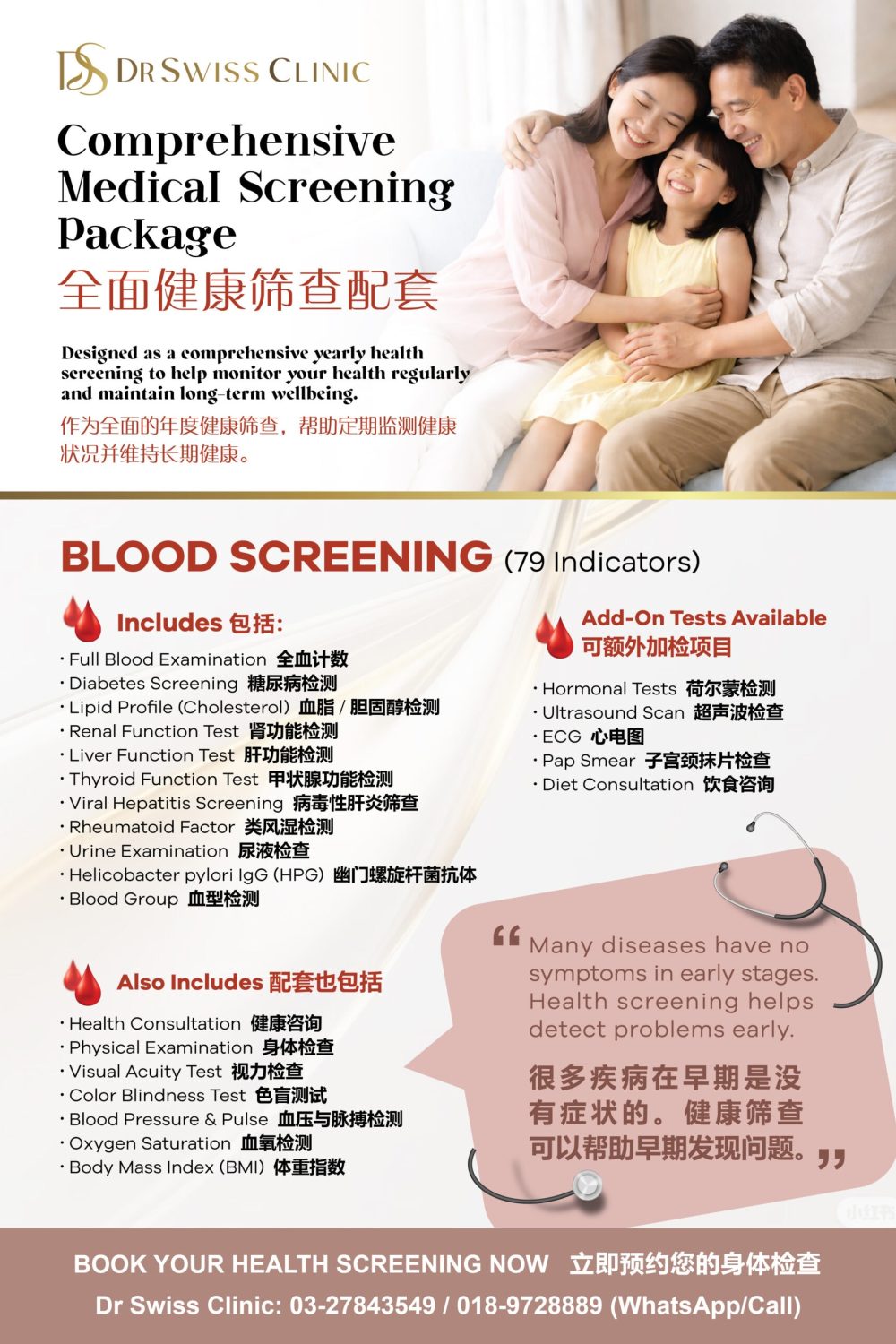
Comprehensive Medical Screening
79 Health Indicators
79 Health Indicators
Blood Tests (79 indicators):
- Full Blood Count (FBC) – evaluates red blood cells, white blood cells, and platelets to detect infections, anemia, or blood disorders.
- Liver Function Test – assesses liver health and detects liver inflammation or damage.
- Kidney Function Test – evaluates kidney performance and detects early kidney disease.
- Diabetes Screening – measures blood glucose levels to detect diabetes or prediabetes.
- Lipid Profile – evaluates cholesterol levels and risk of cardiovascular disease.
- Thyroid Function Test – checks thyroid hormone levels that regulate metabolism.
- Viral Hepatitis Screening – detects hepatitis infections affecting the liver.
- Rheumatoid Factor – helps identify autoimmune conditions such as rheumatoid arthritis.
- Uric Acid – helps detect gout risk.
- Helicobacter pylori IgG Antibody – detects exposure to Helicobacter pylori, a bacteria associated with stomach ulcers and gastritis.
- Urine Examination – evaluates urine for signs of infection, kidney function abnormalities, and metabolic disorders by assessing parameters such as protein, glucose, and cells.
- Blood Grouping (Blood Bank Test) – identifies blood type.
Additional Assessments: Physical examination by doctor, visual acuity, color vision, vital signs (blood pressure, pulse), BMI
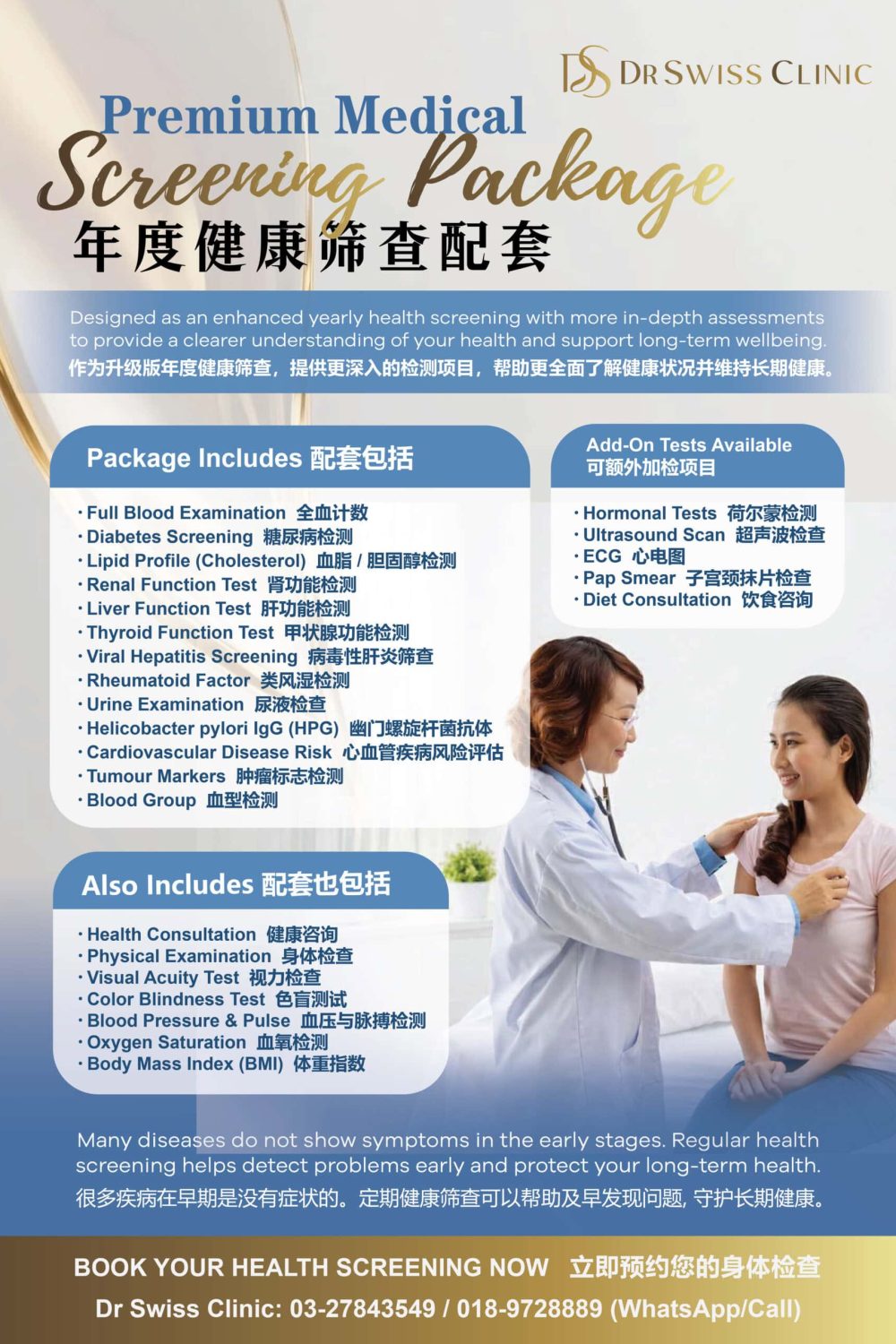
Premium Medical Screening
87 Health Indicators
87 Health Indicators
Blood Tests (87 indicators):
- Full Blood Count (FBC) – evaluates red blood cells, white blood cells, and platelets to detect infections, anemia, or blood disorders.
- Liver Function Test – assesses liver health and detects liver inflammation or damage.
- Kidney Function Test – evaluates kidney performance and detects early kidney disease.
- Diabetes Screening – measures blood glucose levels to detect diabetes or prediabetes.
- Lipid Profile – evaluates cholesterol levels and risk of cardiovascular disease.
- Thyroid Function Test – checks thyroid hormone levels that regulate metabolism.
- Viral Hepatitis Screening – detects hepatitis infections affecting the liver.
- Rheumatoid Factor – helps identify autoimmune conditions such as rheumatoid arthritis.
- Uric Acid – helps detect gout risk.
- Cardiovascular Disease Risk Assessment – evaluates risk factors for heart disease.
- Tumour Markers – screening indicators that may assist in detecting certain cancers.
- Helicobacter pylori IgG Antibody – detects exposure to Helicobacter pylori, a bacteria associated with stomach ulcers and gastritis.
- Urine Examination – evaluates urine for signs of infection, kidney function abnormalities, and metabolic disorders by assessing parameters such as protein, glucose, and cells.
- Blood Grouping (Blood Bank Test) – identifies blood type.
Additional Assessments: Physical examination by doctor, visual acuity, color vision, vital signs (blood pressure, pulse), BMI
Pre-University Medical Screening
Many universities require a medical examination before enrolment to ensure students are fit for academic activities and to identify any medical conditions that may require support during their studies.
Tests Included:
- Full Blood Count (FBC) – evaluates red blood cells, white blood cells, and platelets to detect infections, anemia, or blood disorders.
- Liver Function Test – assesses liver health and detects liver inflammation or damage.
- Kidney Function Test – evaluates kidney performance and detects early kidney disease.
- Diabetes Screening – measures blood glucose levels to detect diabetes or prediabetes.
- Lipid Profile – evaluates cholesterol levels and risk of cardiovascular disease.
- Thyroid Function Test – checks thyroid hormone levels that regulate metabolism.
- Viral Hepatitis Screening – detects hepatitis infections affecting the liver.
- Rheumatoid Factor – helps identify autoimmune conditions such as rheumatoid arthritis.
- Uric Acid – helps detect gout risk.
- Helicobacter pylori IgG Antibody – detects exposure to Helicobacter pylori, a bacteria associated with stomach ulcers and gastritis.
- Blood Grouping (Blood Bank Test) – identifies blood type.
Additional Assessments: Physical examination by doctor, visual acuity, color vision
Foreign Worker Screening
Pre-FOMEMA Screening
Pre-FOMEMA Screening (Preliminary check before official FOMEMA. The purpose is to identify potential health issues early and ensure workers are medically fit before undergoing the official examination.)
Tests Included:
- HIV Ag/Ab Screening – Detects infection with the Human Immunodeficiency Virus (HIV), which affects the immune system.
- HCV Antibody Test – Screens for Hepatitis C virus infection that may cause chronic liver disease.
- Hepatitis B Surface Antigen (HBsAg) – Detects active Hepatitis B infection that can affect liver health.
- Syphilis Screening (TPA) – Detects syphilis, a sexually transmitted infection that can affect multiple organs if untreated.
- Filariasis Antibodies Test – Screens for lymphatic filariasis, a parasitic infection transmitted by mosquitoes.
- Malaria Parasite Test – Detects malaria infection caused by parasites transmitted through mosquito bites.
- Blood Group (FOMEMA) – Determines the individual’s blood type for identification and medical record purposes.
- Urine FEME (Full Examination Microscopy) – Evaluates urine for signs of infection, kidney problems, or other urinary abnormalities.
- Urine Drug Test
- Methamphetamine Test – Screens for the presence of methamphetamine and related stimulant drugs.
- Urine Pregnancy Test (Female) – Determines whether a female patient is pregnant.
Foreign Worker Medical Profile
Foreign Worker Medical Profile (Medical examination required for employment purposes. It helps assess the worker’s overall health status and screens for certain infectious diseases and substance use, ensuring that individuals are medically fit for work.)
Tests Included:
- Blood Group (ABO Rh) – Determines the individual’s blood type and Rh factor for identification and medical record purposes.
- Hepatitis B Surface Antigen (HBsAg) – Screens for active Hepatitis B infection, a viral disease that affects the liver.
- HIV Ag/Ab Screening – Detects infection with the Human Immunodeficiency Virus (HIV), which weakens the immune system.
- Malaria Parasite Test – Identifies malaria infection caused by parasites transmitted through mosquito bites.
- Syphilis Screening (TPA) – Detects syphilis, a sexually transmitted infection that can affect multiple organs if untreated.
- Urine FEME (Full Examination Microscopy) – Examines urine for signs of infection, kidney disorders, or other urinary abnormalities.
- Urine Drug Test
- Urine Pregnancy Test (Female) – Determines whether a female patient is pregnant at the time of examination.
Permit Renewal Screening
Permit Renewal Screening (medical examination required when a foreign worker renews their work permit in Malaysia. The purpose of this screening is to ensure that the worker remains medically fit to continue employment and does not have infectious diseases that may pose a risk to public health. This examination helps monitor the worker’s health status and ensures compliance with medical requirements set by the relevant authorities.)
Tests Included:
- HIV Ag/Ab Screening – Detects infection with the Human Immunodeficiency Virus (HIV), which weakens the immune system.
- Syphilis Screening (TPA) – Detects syphilis, a sexually transmitted infection that can affect multiple organs if untreated.
- Urine Drug Test
- Urine Pregnancy Test (Female) – Determines whether a female patient is pregnant at the time of examination.
Pre-Marital Screening
Pre-marital screening helps couples assess their health and prevent the transmission of infectious or genetic conditions.
- Full Blood Count (FBC) – Checks overall blood health and detects anemia.
- Blood Grouping – Determines blood type for compatibility and future planning.
- Haemoglobin Analysis – Detects inherited blood disorders like thalassemia.
- HBsAg (Hepatitis B Surface Antigen) – Screens for active Hepatitis B infection.
- HBaAb (Hepatitis B Antibody) – Checks immunity to Hepatitis B.
- TPA – Detects syphilis infection.
- Rubella IgG Antibody (Female) – Confirms immunity to rubella to prevent pregnancy complications.
- HIV Ag/Ab Screening – Detects HIV infection for early care and prevention.
Pre-marital screening promotes a healthy start to marriage and allows couples to take preventive steps for future family planning.
Pre-Employment Screening
Pre-employment screening ensures employees are fit for work and protects workplace health and safety.
- HBsAg (Hepatitis B Surface Antigen) – Checks for active Hepatitis B infection.
- HIV Ag/Ab Screening – Detects HIV infection.
- Malaria Parasite Test – Detects malaria infection.
- TPA – Screens for syphilis infection.
- Urine FEME – Checks kidney and urinary tract health.
- Urine Cannabinoids – Detects cannabis use.
- Urine Opiates – Detects use of opiates.
- Detect infectious diseases and chronic conditions early
- Ensure suitability for employment or marriage
- Promote long-term health and wellness
Who should get screened?
- Individuals starting a new job
- Employees requiring company medical check-up
- Foreign worker / permit applications
- Individuals requiring fitness-to-work assessment
Benefits: Early detection, prevention of complications, peace of mind
Sexually Transmitted Diseases (STD) Screening
- TPA – detects antibodies to Treponema pallidum for screening and diagnosis of syphilis.
- Chlamydia trachomatis IgG – detects past or chronic exposure to Chlamydia trachomatis, which may be associated with reproductive complications.
- Herpes Simplex Virus I (HSV-1) IgG – identifies prior exposure to HSV-1, commonly associated with oral herpes infections.
- Herpes Simplex Virus II (HSV-2) IgG – identifies prior exposure to HSV-2, typically associated with genital herpes infections.
- HIV Ag/Ab Screening – detects both HIV antigen (p24) and antibodies for early and established HIV infection.
- Chlamydia trachomatis, Neisseria gonorrhoeae, Trichomonas & Mycoplasma PCR – detects active infections by identifying genetic material of common sexually transmitted pathogens with high sensitivity and specificity.
Why is it important?
- Many sexually transmitted infections may have no symptoms but can lead to serious complications if untreated.
- Early detection reduces the risk of long-term health issues such as infertility and chronic infections.
- Timely treatment helps prevent transmission to partners and, in some cases, from mother to baby.
Who should get screened?
- Individuals who are sexually active
- Those with new or multiple partners
- Couples planning marriage or pregnancy
- Individuals with symptoms such as unusual discharge, sores, or pain
- Anyone who may have been exposed to a sexually transmitted infection
What Our Clients Say
Book Your Appointment
Taking care of your health starts with a simple step.
Contact Dr Swiss Clinic today to schedule your consultation or health screening.
- Call 018-972 8889 for appointment enquiries.